
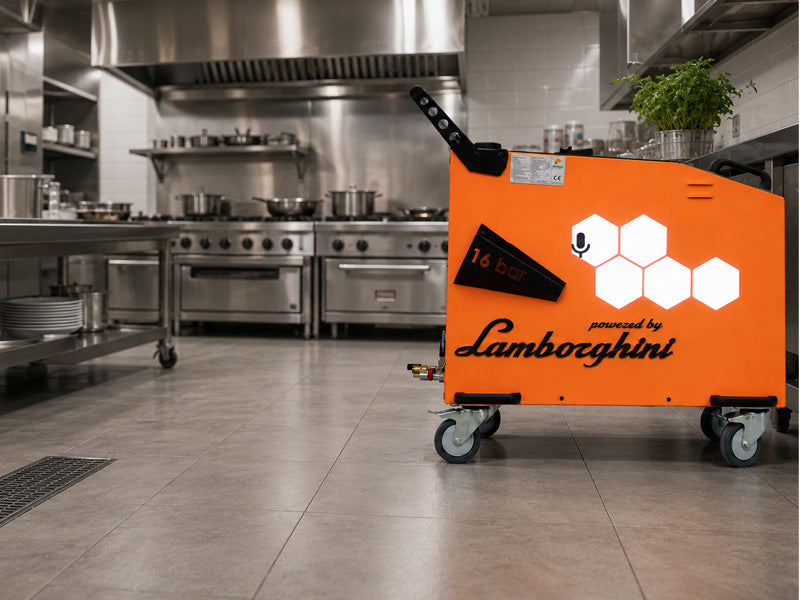
Years of cooking can leave a commercial kitchen coated in layers of oil, smoke residue, and dust. The buildup tends to collect around fryers, range hoods, splashbacks, equipment legs, and floor edges. It can be stubborn to remove, but rushing the job with stronger chemicals or excessive heat can damage surfaces and create safety risks.
A better method is to identify the surface, remove loose soil, apply the right cleaning process, and collect the grease as it releases. Professional steam cleaning can help loosen deposits on suitable hard surfaces, while a compatible degreaser may be needed for thick or carbonized residue. The finish matters just as much: food-contact surfaces must be cleaned and sanitized using the procedure required by the local health authority.
Start with a safe cleaning plan
Schedule deep cleaning when the kitchen is closed and cooking equipment has cooled. Switch off and isolate appliances as directed by their manufacturers. Protect or remove food, packaging, utensils, and small equipment from the work area. Keep staff away from the cleaning zone, post a wet-floor warning where needed, and make sure the area is ventilated.
Wear the personal protective equipment required by the product label and your workplace procedure. Read the degreaser’s label and safety data sheet before use. Never mix cleaning products; combinations such as bleach with acids or ammonia can release dangerous gases. Avoid applying liquids or steam to energized electrical equipment, controls, motors, or unsealed components.
A step-by-step method for heavy grease
1. Sort the surfaces before you begin
Separate the job into surface types: stainless steel, enamel, tile, sealed floors, painted walls, plastic, glass, and food-contact equipment. Check the appliance manual and cleaner instructions for material restrictions. Test the method on a small, hidden area first, especially on coatings, seals, joints, and older finishes.
2. Remove loose soil and collect grease
Scrape or wipe away crumbs, dust, and loose deposits with tools that will not gouge the surface. Place collected grease and disposable wipes in the proper waste container. Do not push grease toward drains; follow local rules for collecting and disposing of fats, oils, and grease.
3. Apply the right degreasing method
For thick, sticky deposits, use a commercial kitchen degreaser approved for the surface and follow its dilution and dwell-time instructions. Work in manageable sections so the product does not dry before you remove it. Agitate with a non-scratching brush or pad where appropriate. Do not assume that a stronger concentration will work better; it can leave residue or damage a finish.
On compatible hard surfaces, controlled steam can soften grease so it can be lifted with a cloth, scraper, or suitable extraction tool. Keep the nozzle moving and use the attachment and settings recommended for the surface. Steam is hot and can cause burns, loosen coatings, or drive moisture into sensitive components. It is a cleaning aid, not a substitute for the manufacturer’s maintenance instructions or a sanitizer.
4. Wipe, rinse, and repeat where needed
Lift the loosened grease away instead of spreading it across the surface. Change cloths or pads frequently, and use clean water to remove detergent residue where the product label calls for rinsing. A surface with years of buildup may need several controlled passes. Repeating a suitable process is usually safer than escalating to an unapproved chemical or abrasive.
5. Finish food-contact surfaces correctly
A surface that looks clean is not automatically sanitized. After cleaning, rinse if required and apply an approved food-contact sanitizer at its labeled concentration and contact time. Allow it to air-dry when the product instructions require that. Follow the applicable local food code and your site’s food-safety plan. Steam alone should not be presented as proof that a food-contact surface has been sanitized.
6. Clean floors last and leave them safe
Clean floors after overhead and equipment work is complete. Remove grease and detergent residue, control water so it does not run into unsafe areas, and keep people out until the floor is dry. Grease and water create a serious slip hazard, especially around fryers and hot equipment.
What about the hood, filters, and exhaust ducts?
Visible grease on hood filters and nearby surfaces is only part of the picture. The exhaust hood, ductwork, fan, and fire-suppression system are safety-critical components. Follow the inspection and cleaning schedule required by local fire codes and the system manufacturer, and use qualified kitchen-exhaust cleaning professionals for areas that require specialist access or documentation. Do not treat a surface-cleaning machine as a replacement for a complete exhaust-system service.
How professional steam cleaning can help
For periodic deep cleaning, professional steam equipment can be useful on compatible equipment exteriors, tile, splashbacks, and other hard surfaces. The heat can help soften residues, while targeted application can make it easier to work around edges and joints. Results depend on the grease, surface material, attachment, operating settings, and the operator’s technique.
Fortador professional steam-cleaning machines are designed for commercial cleaning work. Before using any model in a kitchen, confirm that the intended surface and task are within the machine’s operating guidance, select suitable accessories, and train operators in hot-steam safety. For food-contact equipment, complete the required cleaning and sanitizing procedure after the steam-cleaning step.
Prevent the buildup from returning
A short daily routine makes the next deep clean easier. Wipe splashes after service, clean removable filters on schedule, empty grease containers before they overflow, and assign specific tasks to each shift. Record deep-cleaning dates and recurring problem areas. If grease returns quickly near a cooking line, check the ventilation and cooking process as well as the cleaning routine.
A cleaner kitchen starts with the right process
To remove heavy grease in a commercial kitchen, work methodically: cool and isolate equipment, identify the surface, remove loose soil, use a compatible degreaser or controlled steam where appropriate, collect the residue, and sanitize food-contact surfaces according to local requirements. Keep hood and duct cleaning on its own fire-safety schedule. A planned process protects staff, equipment, and food while making deep cleaning more manageable.
Sources and further reading
U.S. Food and Drug Administration, 2026 Food Code (model code; confirm local adoption and requirements): https://www.fda.gov/media/194741/download?attachment=
U.S. Occupational Safety and Health Administration, Young Worker Safety in Restaurants: Cooking: https://www.osha.gov/etools/young-workers-restaurant-safety/cooking
National Fire Protection Association, NFPA 96: Standard for Ventilation Control and Fire Protection of Commercial Cooking Operations: https://www.nfpa.org/product/nfpa-96-standard/p0096code
Fortador Sensory product information: https://www.fortador.com/fortador

Leave a comment
This site is protected by hCaptcha and the hCaptcha Privacy Policy and Terms of Service apply.