
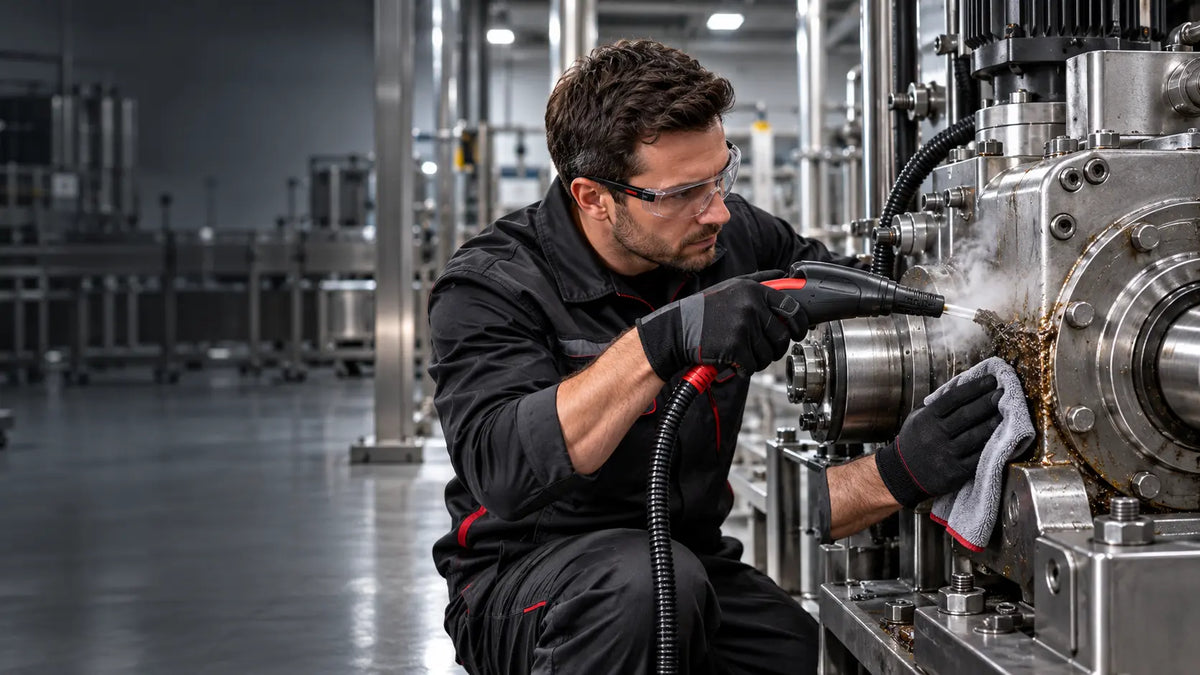
Grease, oil residue and compacted industrial dirt are common around production machinery, conveyors, motors, gears, housings and processing equipment. Traditional cleaning methods often rely on large amounts of water and strong chemicals. This can create a second problem: contaminated runoff spreading across the workshop floor, entering drains or reaching nearby electrical and mechanical components.
A controlled steam-cleaning process can remove grease effectively while keeping water use and mess to a minimum.
Start with safe equipment isolation
Before any cleaning begins, the machine must be stopped and isolated in accordance with the site’s lockout/tagout procedures. Disconnect or protect electrical supply points, control panels, sensors and any components that must not be exposed to moisture or heat.
The surface temperature should also be checked. Steam cleaning is highly effective on many metal surfaces, but sensitive coatings, seals, labels, open bearings, electrical enclosures and delicate electronics require protection or an alternative method.
Use dry or low-moisture steam for controlled cleaning
The key to avoiding flooding is using steam with very low water consumption. A professional industrial steam cleaner produces high-temperature steam that softens grease and lifts contamination from the surface without saturating the work area.
For heavier grease, work in small sections rather than treating the whole machine at once. Apply steam at a controlled distance and angle, allowing the heat to break down the contamination. Use suitable brushes, microfibre cloths or collection tools to loosen and remove residue as you go.
This approach is particularly useful for:
-
Machinery housings and external panels
-
Conveyors and production-line components
-
Engines, pumps and gearboxes
-
Workshop tools and fixtures
-
Food-processing and HoReCa equipment, subject to site procedures
-
Areas where access to drainage is limited
Collect loosened contamination immediately
Steam loosens grease; it does not make contamination disappear. The released residue should be collected rather than washed onto the floor.
For many tasks, operators can wipe the surface with industrial microfibre cloths while cleaning. On larger or heavily contaminated equipment, a wet/dry vacuum or extractor can collect loosened grease, condensation and dirt directly from the work area.
Any collected waste—including oily water, used cloths and grease deposits—should be handled according to the facility’s waste-management and environmental procedures. This is especially important where oils, lubricants or process residues may be classified as hazardous waste.
Select the right accessories and settings
Different surfaces require different tools. A narrow nozzle may be ideal for joints, bolts and hard-to-reach areas, while a wider attachment can clean flat external panels more evenly. Brushes help agitate thick grease, but should be selected carefully to avoid scratching painted, polished or sensitive surfaces.
Steam output should be adjusted to the task. High-pressure, dry steam is useful for stubborn contamination, while a more controlled setting is better near seals, painted surfaces and components that require extra care.
Always test a small, inconspicuous area first—particularly on coated, plastic or composite materials.
Why controlled steam cleaning works
Compared with flooding machinery using water hoses or degreasers, controlled steam cleaning can help businesses:
-
Reduce water use and floor runoff
-
Limit the spread of grease through the work area
-
Reduce reliance on aggressive chemical degreasers
-
Improve access to detailed and difficult-to-reach areas
-
Support faster cleaning between maintenance cycles
-
Keep the workplace cleaner and safer for nearby personnel
A practical solution for industrial maintenance
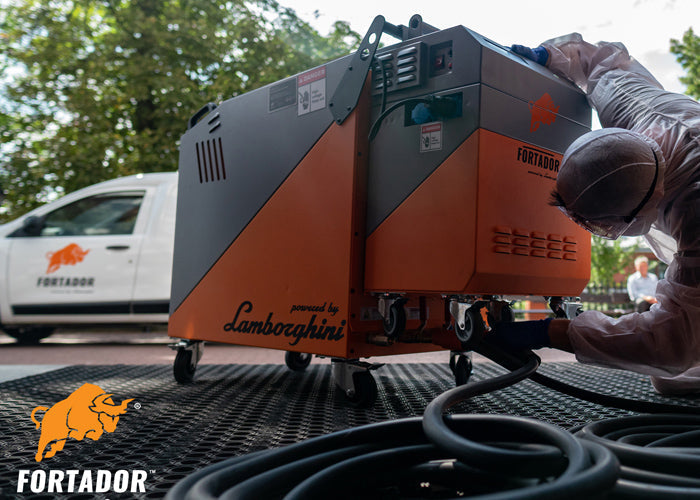
FORTADOR professional steam cleaners are designed for demanding cleaning applications where control, mobility and cleaning performance matter. High-temperature steam can help maintenance teams remove grease and operational dirt from suitable machinery surfaces while using minimal water.
The best result comes from a planned process: isolate the equipment, protect sensitive components, clean in controlled sections, collect the released contamination and dispose of it correctly. This turns grease removal from a messy washdown task into a cleaner, more efficient part of industrial maintenance.
To explore suitable FORTADOR steam-cleaning equipment for your facility, visit fortador.shop or fortador.com.

Dejar un comentario
Este sitio está protegido por hCaptcha y se aplican la Política de privacidad de hCaptcha y los Términos del servicio.