
Why Is My Steam Cleaner Spreading Grease Instead of Removing It?
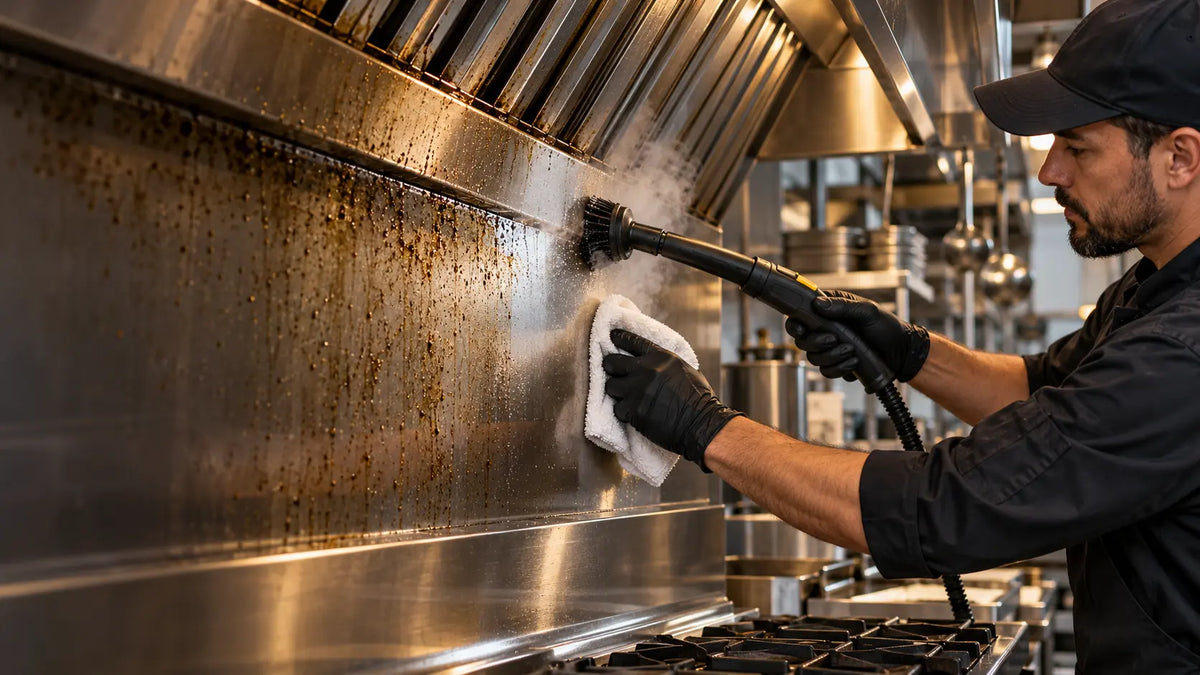
A steam cleaner can loosen kitchen grease, but the heat and moisture do not make the residue disappear. If loosened grease is left on the surface—or the cleaning cloth is already saturated—it can smear across the area instead of being lifted away.
The solution is to clean in small sections, use the right attachment, and wipe the surface immediately with a clean cloth.
Why grease gets smeared
The cloth is saturated. A greasy cloth can’t collect much more residue. It may simply push grease from one spot to another.
You’re working on too large an area. Steam loosens residue, but it still needs to be removed. If you steam a large section before wiping, the grease can spread or cool before you collect it.
The buildup is too heavy for steam alone. Long-standing or carbonized grease may need a surface-compatible degreaser and mechanical removal. Steam can help loosen it, but it may not remove every layer in one pass.
The attachment doesn’t suit the job. A small detail tool can direct steam into corners, while a broader cloth tool can suit larger surfaces. Check the equipment and surface manufacturers’ instructions before choosing an attachment. Kärcher also advises that mechanical action from a brush or cloth can help with some cleaning tasks. Kärcher India
How to remove kitchen grease without spreading it
1. Make the area safe
Take the equipment out of service and let hot surfaces cool. Follow the appliance and site procedures for shutdown and isolation. Wear the required protective equipment, and keep steam away from energized electrical components. OSHA highlights the burn risk from steam and hot equipment, as well as electrical hazards during kitchen cleanup. Occupational Safety and Health Administration
2. Remove loose residue first
Lift off food particles and loose deposits with a suitable scraper or cloth. Use tools that won’t damage the surface. Removing loose soil first helps prevent it from being carried across the area during steaming.
3. Work in small sections
Use a surface-compatible attachment and clean a manageable patch at a time. Start with a short pass, then check whether the grease has loosened. Avoid directing residue onto nearby clean areas, joints, controls, or electrical parts.
4. Wipe immediately
As soon as the steam loosens the grease, wipe it away with a clean microfiber cloth. Fold the cloth so you use a fresh section as you go, and replace it as soon as it becomes greasy. Keep several clean cloths ready for larger jobs.
5. Repeat or use a suitable degreaser
For remaining buildup, repeat the short-pass-and-wipe process. If the grease is baked on, use a degreaser that is approved for the surface and follow its label instructions. Don’t apply cleaning chemicals through a steam cleaner unless the machine manufacturer specifically permits it.
6. Finish according to your kitchen’s hygiene procedure
For food-contact surfaces, steam cleaning alone should not be treated as proof that the surface is sanitized. Follow your facility’s required cleaning and sanitizing procedure, including any necessary rinse and sanitizer steps. FoodSafety.gov recommends cleaning and sanitizing food preparation surfaces and utensils. FoodSafety.gov
Which attachments and supplies help?
For a commercial kitchen degreasing job, prepare:
- An attachment approved for the surface and cleaning task
- Several clean microfiber cloths
- A suitable scraper for loosened deposits, where appropriate
- A surface-compatible degreaser for stubborn buildup, if needed
- Required protective equipment and a safe way to manage floor moisture
The key is having a clean cloth ready to collect loosened grease. Steam loosens it; the cloth removes it.
Surfaces that need extra care
Test an inconspicuous area first, and follow the surface manufacturer’s guidance. Painted or coated panels, plastics, seals, wood, and delicate finishes may not tolerate high heat or direct steam. On stainless steel, use a suitable cloth or tool and avoid abrasive attachments that could scratch the finish.
Also, cleaning accessible kitchen surfaces does not replace the kitchen’s separate procedures for maintaining exhaust hoods and ductwork.
The takeaway
If your steam cleaner is spreading grease, check the cleaning sequence: remove loose soil, steam a small section, and wipe immediately with a clean part of the cloth. Change cloths often, and use a suitable degreaser when heavy or baked-on residue needs extra help.
A professional steam cleaner can be a useful part of a kitchen cleaning routine when it is matched to the surface, attachment, and cleaning procedure. Explore Fortador’s professional steam cleaning equipment at fortador.com.

Laisser un commentaire
Ce site est protégé par hCaptcha, et la Politique de confidentialité et les Conditions de service de hCaptcha s’appliquent.